Hot coffee on the morning commute. Ice water that's still cold at the ballfield at 3 p.m. One tumbler pulls off both, and it isn't magic. It's physics, materials science and some smart engineering working together.
Here's how an insulated tumbler actually works, what separates a great one from a so-so one, and how to get every last hour out of yours.
The short answer
Heat moves three ways: conduction, convection and radiation. A vacuum-insulated tumbler blocks all three with two steel walls, an airless gap between them and, often, a reflective layer. Keep the lid on and your drink stays right where you want it.
What is an insulated tumbler?
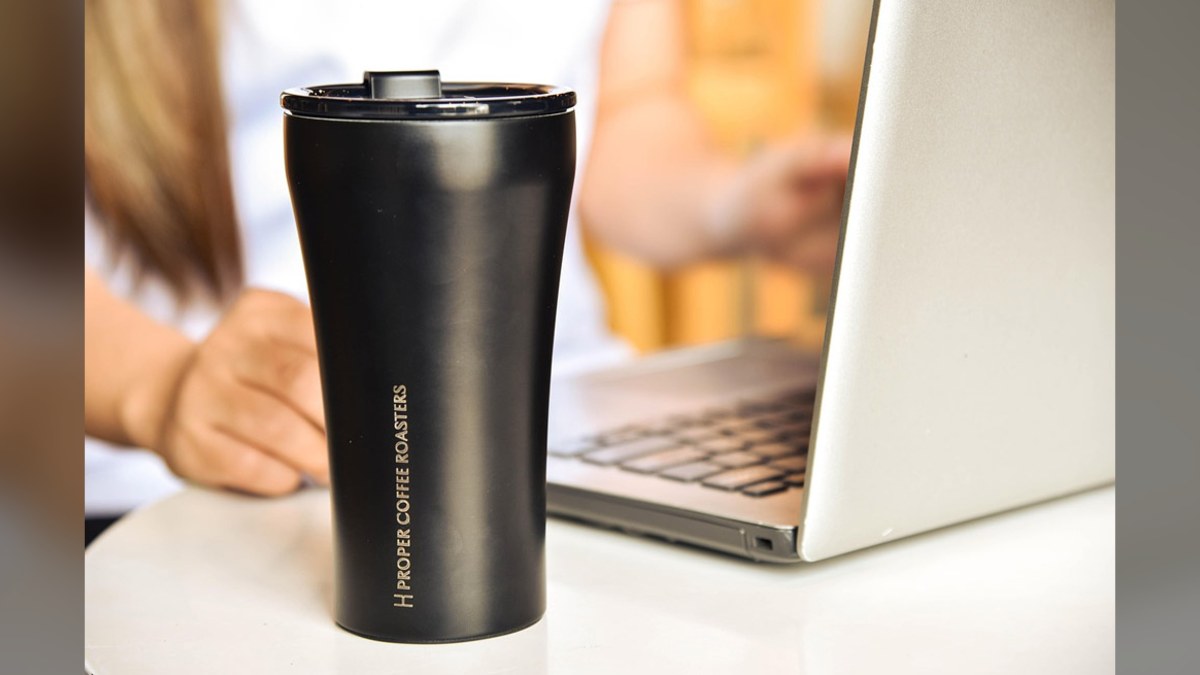
An insulated tumbler (you'll also hear insulated cup or travel tumbler) is a lidded drinking cup built to hold your drink's temperature instead of letting it drift toward room temperature. The good ones use two stainless steel walls with a vacuum sealed between them, which is why the same cup can keep coffee hot all morning or ice water cold all afternoon.
That's the big difference from a regular cup or mug. A ceramic mug or a single-wall cup lets heat pass right through, so hot drinks cool quickly and cold drinks warm up and sweat. Insulation also beats the old trick of adding more ice, which just waters your drink down as it melts.
The three ways heat moves
To see why the design works, it helps to know what it's up against. Heat always moves from warm to cool, and it has three ways to get there. A good insulated tumbler is built to block all three.
| Type | How it works | Everyday example |
|---|---|---|
| Conduction | Heat travels through a solid, molecule to molecule | A metal spoon heating up in a hot pot |
| Convection | Heat moves with a flowing liquid or gas | Coffee in an open mug giving off heat to the cooler air around it |
| Radiation | Heat travels as infrared waves, no contact needed | Sunlight warming your face |
Conduction is why a spoon left in a hot pot gets hot all the way up the handle. Convection needs a liquid or gas to carry the heat, like warm air rising off an open mug. Radiation doesn't need contact or air at all. It's the same infrared energy you feel from the sun on your face.
What makes a tumbler "insulated"?
Most high-quality tumblers use three layers of defense:
- Two walls. The inner wall touches your drink. The outer wall stays comfortable in your hand.
- A vacuum between them. The air is pulled out of the gap. Conduction and convection need something to travel through, so with no air, they have almost nowhere to go.
- A reflective layer (on some models). It bounces radiant heat back into a hot drink or away from a cold one.
The vacuum does most of the heavy lifting. Swap it for plain air and the same tumbler loses a big chunk of its performance.
No air, no bridge, no escape. That's the whole trick.
How it keeps drinks hot
Pour in hot coffee and the heat immediately starts looking for a way out. The vacuum blocks the easiest route. Stainless steel conducts heat well, but with no air and no solid bridge between the inner and outer walls, heat has almost nothing to travel through.
No air also means no convection currents inside the walls, so heat can't ride moving air out either. Any radiant heat trying to escape gets bounced back by the reflective layer, if your tumbler has one. That leaves the lid and the rim as the only real weak spots, which is why coffee in a good tumbler stays warm for hours, even on a cold day.
How it keeps drinks cold
It's the same science in reverse. With a cold drink, the goal is to keep outside heat from getting in. Warm air, a sunny dashboard and your own hand all try to pass heat to the drink, and the vacuum stops conduction and convection just like before. A tight lid keeps warm air from swirling in over the top, so your ice lasts longer and your drink doesn't turn lukewarm by lunch.
Why no sweat
Ever notice an insulated tumbler doesn't sweat? The outer wall never gets cold enough to pull moisture out of the air, so your hands and your desk stay dry.
Do metal cups keep drinks colder?
Only if they're insulated. A single-wall steel or aluminum cup feels cold at first, but metal passes heat easily, so it soaks up warmth from the air around it. The drink warms fast and the outside sweats. A double-wall, vacuum-insulated stainless cup is the one that keeps drinks cold for hours.
Why stainless steel?
Plastic and glass make fine cups, but nearly every serious insulated tumbler is food-grade stainless steel. Here's why:
- Durable: rugged and dent resistant for everyday life
- Non-reactive: won't change the taste of your drink
- Hygienic: resists bacterial buildup and cleans easily
- Structural: the vacuum does the insulating while the steel holds it all together. Some brands add copper or ceramic coatings for performance or taste.

Types of insulated tumblers
Not all tumblers are built the same way, and the insulation method is the biggest factor in both performance and price.
| Type | How it insulates | Performance | Price |
|---|---|---|---|
| Vacuum-sealed | An airless gap between two steel walls | The most effective | Usually the highest |
| Foam-insulated | A foam layer instead of a vacuum | Better than single-wall, not as good as vacuum | Lower |
| Air-insulated | A simple air gap | Some insulation, much less efficient | Most budget friendly |
| Ceramic-lined | Stainless insulation with a ceramic interior | No metallic taste, flavor stays clean | Varies |
For everyday use, vacuum-insulated stainless is worth it. It's the type that actually delivers hours of hot or cold. Foam and air-insulated tumblers are fine for short trips and tight budgets, and a ceramic lining is a nice upgrade if you're picky about taste.
Don't forget the lid
The lid is the part most people overlook, and it's where most of the heat escapes. Even the best vacuum walls can't help much if the top is wide open. Look for:
- An airtight seal that stops warm or cold air from trading places with your drink
- A spill-resistant design that prevents leaks and holds temperature at the same time
- Small openings, or a way to close them. Sip holes and straw slots let a little heat through, so a fully sealed or slide-closed lid holds temperature best.
Most lids are BPA-free plastic or silicone. Some high-end lids add metal parts or even their own vacuum seal.
How long will my drink last?
It depends on the tumbler, the lid and how you use it. Here are typical ranges:
| Top-tier vacuum tumbler, sealed lid | Everyday tumbler, sip lid | |
|---|---|---|
| Hot drinks | About 6 to 12 hours | About 4 to 7 hours |
| Cold drinks | Up to about 24 hours | About 10 to 15 hours |
Typical ranges, not guarantees. Check the maker's rating for your specific tumbler.
What moves the number:
- Starting temperature. Coffee poured piping hot stays hot longer than coffee that's just warm.
- How full it is. A full tumbler holds temperature better than a half-full one.
- The lid. Leaving it off, or opening it every few minutes, drains performance fast.
- The weather. A freezing morning pulls heat out of hot drinks faster, and a scorching afternoon pushes heat into cold ones.
- Ice. For cold drinks, starting with plenty of ice buys you extra hours.
Get the most out of it
☐ Preheat with hot water or pre-chill with ice water before filling
☐ Fill it up instead of leaving it half empty
☐ Keep the lid on as much as possible
☐ Clean it regularly
☐ Check the maker's dishwasher advice, since high heat can wear out seals
Quick answers
How do insulated cups work?
Two stainless steel walls with a vacuum sealed between them. Heat can't easily cross the vacuum, so hot drinks stay hot and cold drinks stay cold.
Is an insulated tumbler the same as an insulated cup?
Pretty much. "Tumbler" usually means a cup-shaped container with a lid, often with a straw or sip opening. The insulation works the same way.
Do tumblers keep drinks cold without ice?
Yes. A vacuum-insulated tumbler slows warming with or without ice. Ice just gives you more cold to work with, so the drink stays colder for longer.
Can an insulated tumbler go in the dishwasher?
Check the maker's instructions. High heat can wear out lid seals, and hand washing helps the finish last longer.

Science, with your logo on it
Want insulated tumblers engraved for your team or clients?
Tell us the colors, the quantity and your logo. Our 20 oz and 30 oz tumblers include a 3″ laser engraving.