A chopping board (or cutting board, depending on where you grew up) is one of the hardest-working tools in any kitchen. The right one protects your knives, keeps food safe and can even double as a serving piece.
The short answer
The main types are wood, bamboo, plastic and rubber. Hardwoods like maple, walnut, teak and acacia are easy on knives and last for years. Bamboo is affordable and sustainable but a little harder on edges. Plastic is cheap and dishwasher safe. Skip glass and stone for cutting, since they dull knives fast.
What to look for in a chopping board
- Knife friendliness: the harder the surface, the faster your knife dulls
- Cleaning: do you want it to go in the dishwasher?
- Maintenance: are you okay oiling it now and then?
- Durability: how often will you need to replace it?
- Size: big enough to work on, small enough to store and wash
Chopping board materials compared
| Material | Easy on knives? | Care | Lifespan | Best for |
|---|---|---|---|---|
| Hardwood (maple, walnut, teak, acacia) | Yes | Hand wash, oil monthly | Years to decades | Everyday prep, carving, serving |
| Bamboo | Fairly, but harder on edges than hardwood | Hand wash, oil occasionally | Years | Budget-friendly everyday use |
| Plastic | Yes | Dishwasher safe | Replace when deeply scored | Raw meat, color-coded commercial prep |
| Rubber | Very, the softest surface | Easy to clean, can be resurfaced | Very long | Professional kitchens |
| Glass, marble or stone | No, dulls knives quickly | Easy | Long | Serving only |
Wood boards
Hardwood boards are the classic for a reason. They're forgiving on knife edges, tough enough to last for years and beautiful enough to go straight to the table. Acacia is especially hard and water resistant, teak is naturally oily and resists moisture, maple is clean and light, and walnut is dark and elegant.
Edge grain, end grain or face grain?
| Grain | What it is | Why choose it |
|---|---|---|
| Edge grain | Long strips glued side by side | Durable, affordable and the most common |
| End grain | Short blocks set on end, like a checkerboard | Easiest on knives, hides cut marks, costs more |
| Face grain | The wide face of the board | Shows off the grain, but cut marks show too |

Shop the teak butcher block board →

Shop the acacia large carving board →
Bamboo boards
Bamboo is technically a grass, and it makes a hard, lightweight and very sustainable board. It's usually more affordable than hardwood. Because it's so hard, it can dull knives a bit faster, and like wood it should be hand washed and oiled now and then.

Shop the large bamboo cutting board →
Plastic and rubber boards
Plastic boards are inexpensive and go in the dishwasher, which makes them popular for raw meat. They scar more easily, though, and deep grooves are hard to clean, so plan to replace them. Rubber boards are the softest on knives and can be resurfaced, which is why many professional kitchens use them.
Pro kitchen tip
Many commercial kitchens use color-coded boards to prevent cross-contamination. A common scheme is red for raw meat, yellow for raw poultry, blue for fish, green for produce, white for dairy and bread, and brown for cooked meat.
Buy the board for how you cook, not just how it looks. The good ones do both.
Board shapes and what they're for
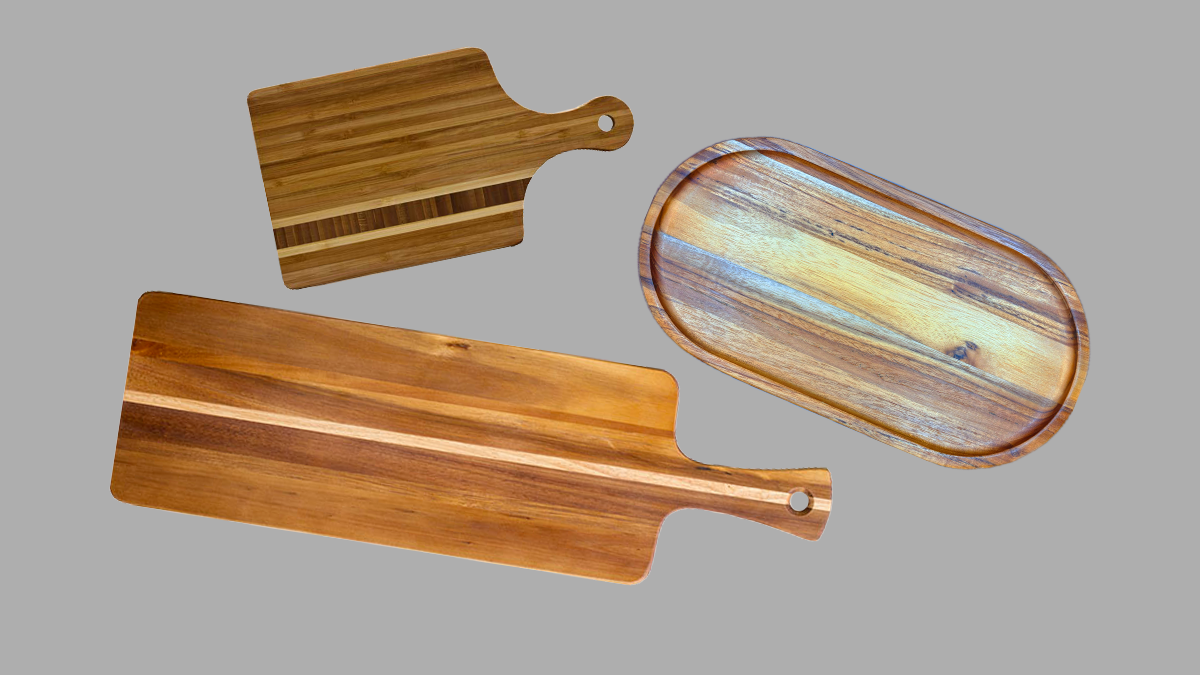
- Carving board: a juice groove catches drippings from roasts and brisket
- Bread board: often long and slim, sometimes with a handle
- Bar board: small, for slicing citrus and garnishes
- Serving board: built for charcuterie and entertaining
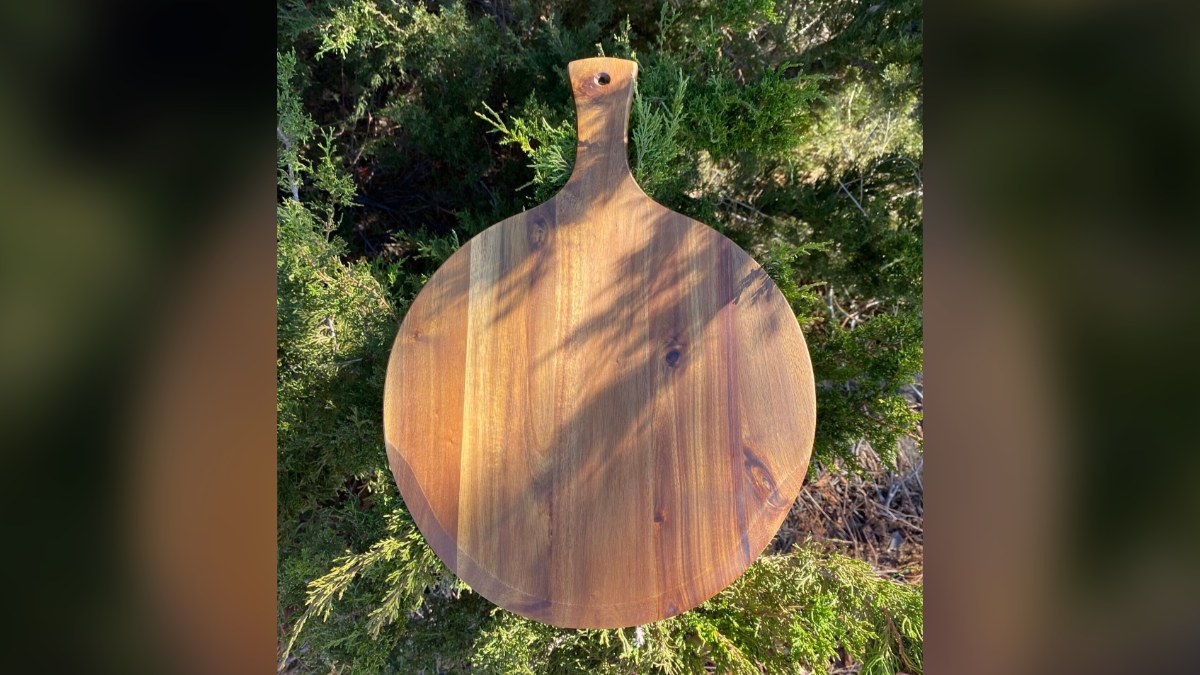
- Pizza peel: for sliding pizzas in and out of the oven, then serving
Keep any wood board in shape with our guide to caring for wooden cutting boards, and see why acacia is such a popular choice.
Quick answers
What's the most hygienic chopping board?
Wood and plastic are both safe when cleaned properly. Plastic can go in the dishwasher, while wood needs a good hand wash and time to dry.
What chopping board is best for knives?
End-grain hardwood or rubber. Both are forgiving on edges.
Is bamboo better than wood?
Bamboo is more affordable and very sustainable. Hardwood is a little gentler on knives. Both are good choices.
Should I use separate boards for meat and vegetables?
Yes. It's one of the easiest ways to prevent cross-contamination.
Boards that become heirlooms
Want engraved cutting or serving boards?
Tell us the occasion and the quantity. We'll recommend the right wood and engraving.