Bamboo spoons and spatulas have gone from specialty item to kitchen staple. They look great, they're light and they're made from a plant that grows back fast. But if you're used to metal and plastic, it's fair to ask whether a natural material is safe to cook with.
The short answer
Yes. Solid bamboo utensils are food safe, won't melt, won't scratch your pans and don't carry the additives found in some cheap plastics. Like any wooden tool, they need to be washed and dried well. The one thing to avoid is bamboo fiber plastic, which is a different product entirely.
What bamboo utensils are made of
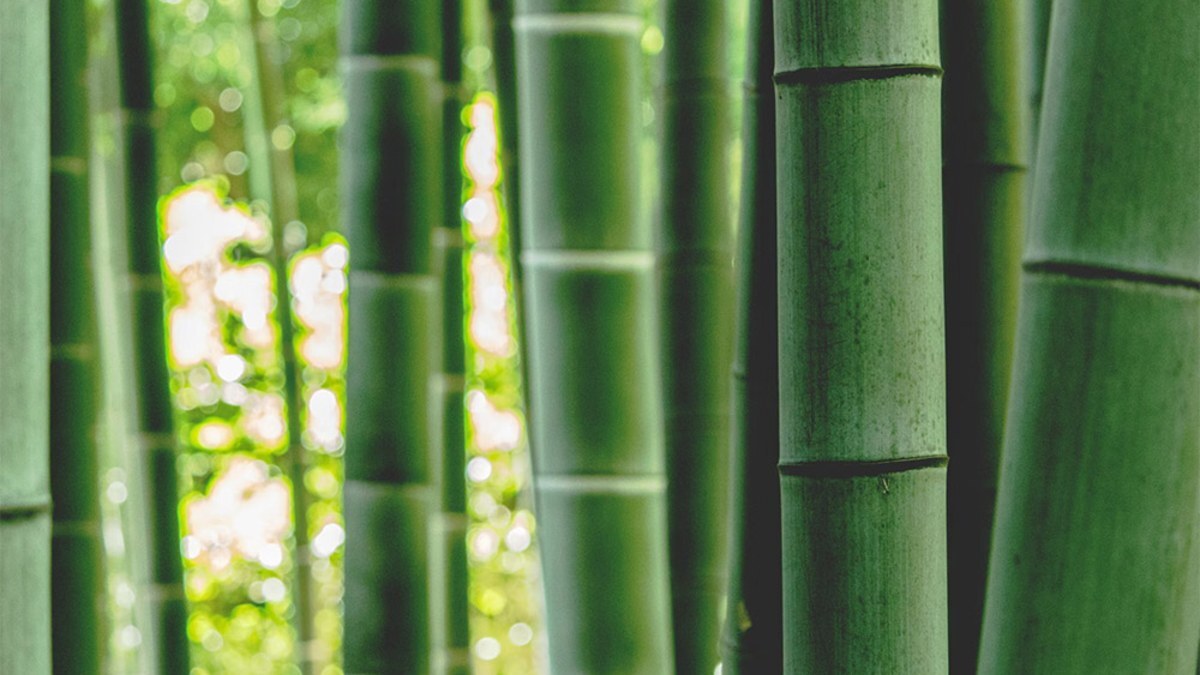
Bamboo is technically a grass, not a tree. For utensils, the stalks are cut, dried, shaped or pressed, then sanded smooth and finished with a food-safe oil. The result is dense and hard, harder than many hardwoods, which is why bamboo spoons hold up so well to daily cooking.
What about bacteria?
Bamboo is dense, so it soaks up less liquid than many woods, and the bamboo plant contains natural compounds with some antimicrobial activity. That's a nice bonus, but it doesn't replace washing. Clean bamboo utensils with hot, soapy water after every use, especially after raw meat or eggs, and let them dry completely.
What about mold?
Moisture is bamboo's real enemy. Utensils that stay damp, soak in the sink or get put away wet can grow mold. Dry them right away and store them where air can reach them, and mold won't be a problem.
Chemicals and heat
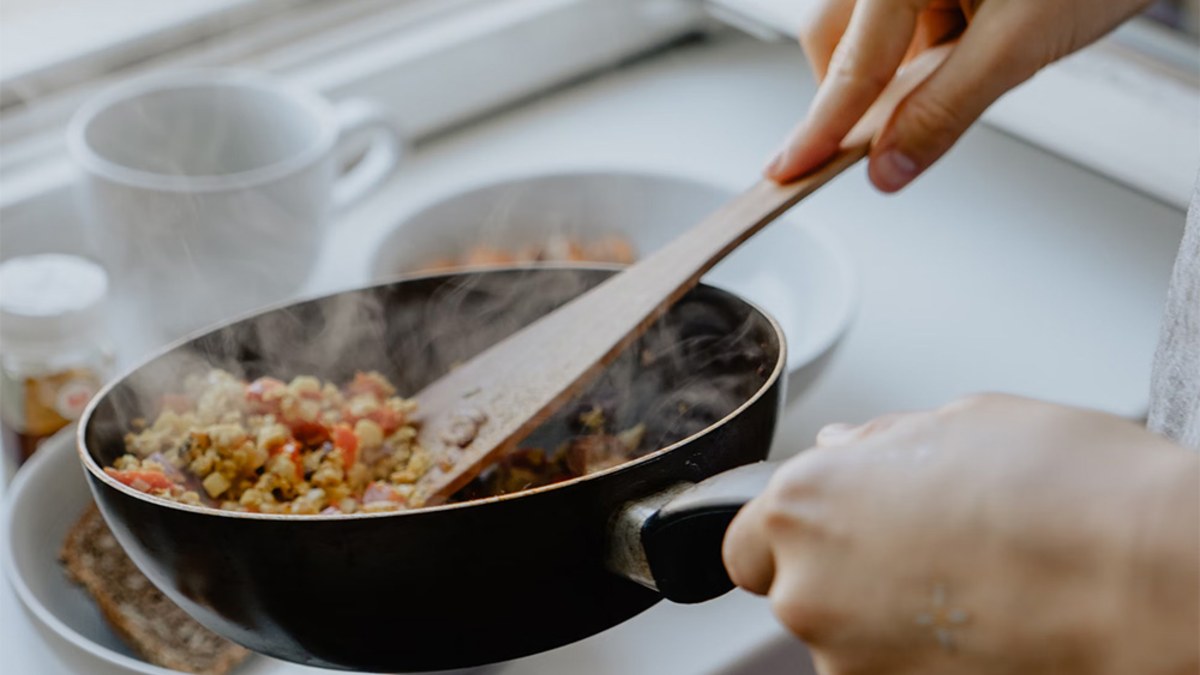
Solid bamboo doesn't contain BPA or the plasticizers found in some plastics, and it won't melt in a hot pan. It can scorch if you leave it resting against a burner or over an open flame, so keep it moving the way you would a wooden spoon.
Watch out for "bamboo fiber" plastic
Some cups, plates and utensils are sold as bamboo but are actually bamboo powder mixed with melamine resin, a type of plastic. When they get hot, melamine can migrate into food, and European regulators have pulled many of these products from shelves. If a bamboo item looks molded, feels like plastic or is labeled bamboo fiber, it isn't solid bamboo.
Solid bamboo, washed and dried, is one of the safest tools in the drawer.
How bamboo compares
| Material | Melts? | Scratches nonstick? | Care |
|---|---|---|---|
| Bamboo | No, but can scorch | No | Hand wash, dry, oil occasionally |
| Hardwood | No, but can scorch | No | Hand wash, dry, oil occasionally |
| Nylon | Yes, above about 400°F | No | Dishwasher safe |
| Silicone | Only past its rating | No | Dishwasher safe |
| Stainless steel | No | Yes | Dishwasher safe |
Bamboo care checklist
☐ Wash by hand in warm, soapy water
☐ Dry right away and let it air out fully
☐ No soaking and no dishwasher
☐ Rub in food-safe mineral oil every month or so
☐ Replace anything cracked, splintered or burnt

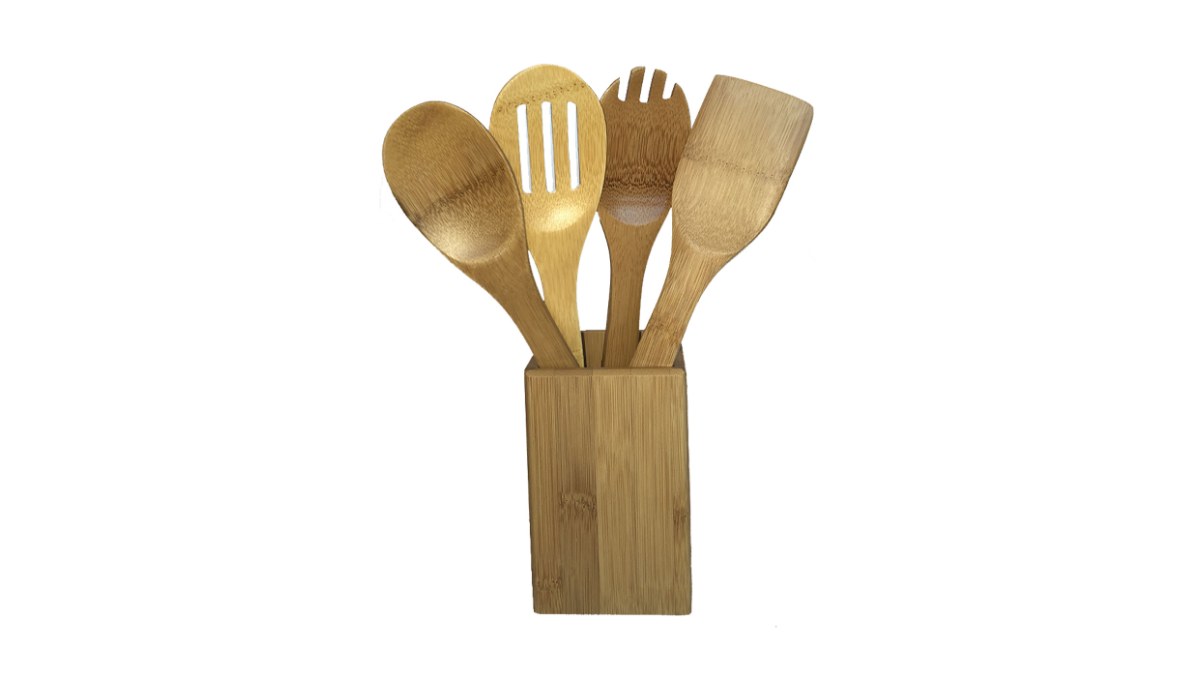
Shop the 12″ bamboo serving spoon →

Want the full care routine? Here's how to care for wooden and bamboo utensils.
Quick answers
Are bamboo utensils better than plastic?
For most cooking, yes. Solid bamboo won't melt or scratch your pans, and it's a renewable material.
Can bamboo utensils go in the dishwasher?
No. The heat and water can crack and warp them. Hand wash instead.
Are bamboo utensils safe for nonstick pans?
Yes. They're gentle on nonstick, ceramic and enameled cookware.
How long do bamboo utensils last?
With good care, years. Replace them when they crack, splinter or char.
Bamboo, with your logo
Want engraved bamboo utensils for your brand?
Tell us what they're for and how many you need. We'll recommend the right bamboo pieces and an engraving that fits.